
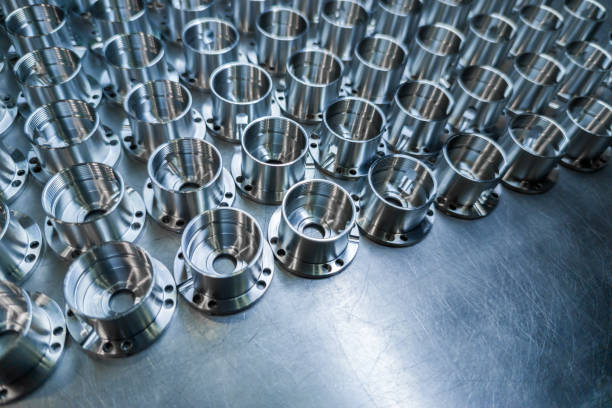
In 2026, real estate projects demand forged steel fittings that can withstand extreme stress without ruptures or leaks. Architectural experts and construction engineers are therefore preferring to use duplex grade F51 in Scotland for construction projects. Amid the challenging climatic conditions in Scotland, construction companies are focusing on building long-lasting infrastructure that is durable, corrosion-resistant, and cost-effective. Grade F51 is thus a popular choice among the construction companies.
What is duplex grade F51 steel?
Duplex grade F51 steel is a high-performance variety of stainless steel that comprises an austenitic-ferritic composition that approximately combines 3% molybdenum, 5% nickel, and 22% chromium; this allows grade F51 to offer superior strength that is almost double that of conventional steel. This type of steel has a dual-phase structure, making it tougher than other variants.
The key characteristics of grade F51 steel are as follows:
- Grade F51 steel has a yield strength comparable to conventional 300-series austenitic stainless steels, such as 316L.
- Grade F51 steel has a microstructure consisting of a 50-50 dual-phase mixture of austenite and ferrite.
- Grade F51 steel is extremely resistant to localised corrosion and chloride-induced stress corrosion cracking.
- Grade F51 steel is reliable for welding purposes, where corrosion resistance and phase balance are essential.
- Grade F51 steel is a cost-effective solution because it has lower nickel content than austenitic grades.
Hence, grade F51 is widely used in construction projects where erosion risk is high.
Major applications of grade F51 steel
Grade F51 steel is highly recommended for the following scenarios:
- Aggressive chemical and petrochemical processing plants.
- Power generation and desalination facilities require fittings that will outlast brine with ease.
- Grade F51 duplex fittings in hulls, ballast water tanks, and cooling systems do the trick for ships that are in constant contact with ocean water.
- Offshore rigs that rely on grade F51 steel use it in subsea pipelines and top-side processing equipment.
Why is Grade F51 steel suited for the construction environment of Scotland?
Scotland’s construction industry faces a unique set of challenges due to coastal exposure, sudden temperature fluctuations, and high rainfall. Duplex grade F51 steel is well-suited to these climatic conditions because it is durable and can withstand temperature fluctuations. Thus, these steels perform consistently under harsh weather conditions and are also effective in coastal environments.
For construction and infrastructure projects such as bridges, commercial buildings, and ports, the use of Grade F51 steel is common in Scotland. This steel future-proofs the developments and prevents corrosion-related failures. Moreover, the strength-to-weight ratio of this steel allows engineers to reduce thickness without compromising safety. This is an important factor for the efficiency-driven construction projects.
Lolu Alloys Ltd. is a trustworthy name for sourcing grade F51 in Scotland. Contact the team directly for a quote or any professional consultation on the different types of steel and their uses. Check our website for more details on the different variants of steel.
Recent Comments